These articles explore the body, the mind, the environment, and the systems that shape human health. Each piece is written to make complex ideas easier to understand, whether the topic is training, nutrition, sleep, stress, digestion, symptoms, physiology, disease, or the way modern life affects how we feel and function.
Strength, Health, & the Art of Living Well
When Leanness Becomes a Stand-In for Health
The fitness industry has spent decades teaching people to treat leanness as one of the clearest visible signs of health. There is some validity to that association. Excess body fat can increase the risk of metabolic disease, impair physical function, and contribute to poorer health outcomes. But somewhere along the way, a useful observation became a cultural rule: if carrying too much body fat can be harmful, then being leaner must always mean being healthier.
That conclusion does not hold up very well.
Health is not a competition to see how little body fat a person can carry. Human physiology does not reward us indefinitely for becoming leaner and leaner, and there is no biological imperative to maintain the degree of leanness that much of the fitness industry now presents as an ideal. Body fat serves real purposes. It stores energy, contributes to endocrine function, protects us during periods of scarcity, and forms part of the energetic buffer that allows the body to continue functioning when conditions become less predictable. At some point, losing additional fat stops producing meaningful health benefits and becomes primarily an aesthetic pursuit. If pushed far enough, the same process that initially improved health can begin to undermine it.
The confusion becomes easier to understand when we separate health from the way health is represented.
Most of the things that make someone genuinely healthy are difficult to see. You cannot look at a photograph and know someone's blood pressure, insulin sensitivity, cardiovascular fitness, bone density, sleep quality, reproductive function, relationship with food, ability to recover from training, or likelihood of remaining capable and independent later in life. What you can see is body fat. You can see abdominal definition, muscularity, vascularity, and the sharpness of someone's physique. Because those qualities are visible, measurable, and easy to compare, they become convenient symbols for a much larger and more complicated concept.
Eventually, the symbol begins to carry more weight than the thing it was meant to represent.
This is where leanness starts to acquire a meaning that extends well beyond physiology. A lean physique becomes associated with discipline, control, work ethic, competence, and even personal worth. The difficulty of achieving it adds to its social value. If something is hard to obtain, then possessing it can be interpreted as evidence that the person has done something most people cannot or will not do. The body becomes a public demonstration of self-control.
That does not mean every desire to be lean is artificial, nor does it mean human beings have no evolved preferences concerning appearance. Physical traits can communicate information about age, strength, fertility, health, and capability, and those signals have always influenced attraction and status. But there is a large distance between finding a healthy, capable body appealing and believing that visible abs, extreme muscularity, or very low body fat represent some natural human ideal. Those standards are shaped heavily by culture, and modern fitness culture has become exceptionally effective at attaching status and identity to them.
If you removed the mirrors, photographs, social media, bodybuilding culture, comparison, and the knowledge that other people admired a lean physique, there is little reason to think the human organism would spontaneously decide that its abdominal muscles ought to become more visible. The body has no concept of a six-pack as an achievement. It responds to energy availability, movement, stress, recovery, and the environment it is trying to survive within.
That becomes especially apparent when someone tries to maintain a level of leanness that the body resists. Hunger increases. Food becomes more salient. Energy expenditure can decline. Recovery can worsen. Hormonal and reproductive function may begin to change. None of this means dieting is inherently unhealthy or that being lean is somehow unnatural. Human beings routinely tolerate discomfort in pursuit of things they value. The interesting part is that fitness culture often interprets the body's resistance to continued fat loss as evidence that the pursuit is becoming more admirable. The harder the condition is to maintain, the more discipline it appears to demonstrate.
Difficulty itself begins to create status.
This helps explain why extreme physiques can become so commercially powerful. They provide an immediate visual signal that appears to say something about the person before we know anything else about them. In some cases, the signal becomes even further separated from health when performance-enhancing drugs are used to create levels of muscularity and leanness that would be extraordinarily difficult to maintain naturally. The appearance may become more impressive at exactly the same time that the behaviors required to produce it create additional health risks. The image still communicates health because that is what the culture has taught people to see.
None of this requires rejecting leanness, bodybuilding, or aesthetic goals. Wanting to look a certain way is a perfectly legitimate preference. The problem begins when preference is disguised as biological necessity and appearance is allowed to stand in for a much broader definition of health.
We are not born wanting visible abs. We are born with drives for food, safety, movement, belonging, competence, reproduction, status, and connection. Culture can take those much older desires and attach them to a particular body, then convince us that obtaining the body will provide the things underneath it. The fitness industry is especially good at making that substitution because the body is visible, difficult to change, easy to compare, and easy to sell.
Leanness can be part of health. It can also be an aesthetic goal, a status symbol, an identity, or a commercial product. Problems arise when we stop distinguishing between those things.
Sit-Ups wont give you a Sixpack
Hundreds of thousands of men and women are still doing crunches till they're blue in the face, with or without miracle machines from Tell Sell, in the hope of gaining a slimmer waist or a washboard stomach. Impossible, say trainers. And a study published in the Journal of Strength and Conditioning Research proves them right again.
Localized fat loss
No, say trainers, you can't lose fat in specific places by training. You can only lose fat. If you are burning more energy than you consume via food, your body breaks down fat everywhere it can, and sooner or later you'll see the benefits in the places you most want to see the fat melting away.
Researchers have done countless experiments in which subjects do sit-ups and crunches, and measured the amount of subcutaneous fat that disappeared around their waste - with no result.
American sports scientists repeated these studies briefly by getting 14 non-active people in their twenties with stable bodyweight to train their abdominal muscles for six weeks consecutively. The subjects had to do a workout for their middle section five times a week. The workout consisted of seven exercises, with two sets of ten reps for each.
A control group of ten people in their twenties did nothing in those six weeks.
Results
The table below shows that the ab training [Exercise] did not result in any statistically significant changes in the bodyweight, total fat mass or the android fat mass. Android fat is the fat in the torso: around the abdomen, chest, shoulders, neck and back. At the end of the six weeks the test subjects were capable of doing more crunches.


Conclusion
"Abdominal exercise training was effective to increase abdominal strength but was not effective to decrease various measures of abdominal fat", the researchers conclude.
"Some individuals attempt to reduce their waistline by solely performing abdominal exercises possibly because of claims made by various abdominal equipment advertisements. The information obtained from this study can help people to understand that abdominal exercise alone is not sufficient to reduce waistline or subcutaneous abdominal fat."
Smart Abdominal Training
Although you are regularly bombarded with exercises claiming to tone and strengthen the abdominal muscles, many of these exercises are inadequate and ineffective. Some exercises may actually lead to lower back pain, and do little to strengthen the abdominals.
The ‘villains’ of abdominal training are the hip flexors, which bring the legs and trunk toward each other. Muscles that flex the hip include the psoas major, illiacus, rectus femoris, pectineus and sartorius. Full sit-ups involve the hip flexors, which may cause the lower back to arch and unwanted back pain, particularly in individuals with relatively weak abdominals. Leg-raising exercises in a supine position challenge the hip flexors with limited involvement of the abdominals. Frequently, there is a muscle imbalance between the weaker abdominals and the stronger hip flexors in trunk flexing movements. The goal of abdominal training is to maximize the involvement of the abdominals, while minimizing the involvement of the hip flexors.
The Core. What is it? And why should you care?
Core exercises are an important part of any strength training program, especially for those just starting out. Many people think that the occasional crunch will be enough to solve any issues they have when it comes to a lack of core strength, however this approached leaves many muscles of the core neglected. Let’s find out why…
What is the Core?
The core is often thought of as just the abs, which makes it understandable as to why sit-ups are seen as the go-to exercise. Unfortunately, it is not that simply. Think about the core as a muscular box where the abdominals make up the front, the paraspinals and gluteals sure up the back, the diaphragm as the roof, and the pelvic floor and hip girdle musculature as the floor.

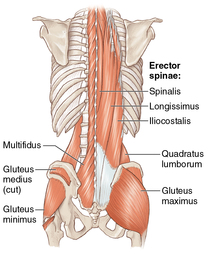


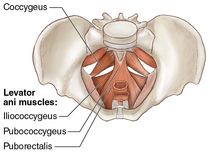
This intricate construction can be understood simply as the body’s foundation for movement. It is the central region providing a girdle of strength and connecting the abdomen with the lower back and hips. These muscles, together with the spinal muscles, create a stable base for generating strength and providing support for all movement.
Core Anatomy:
- Abdominals – the abdomen is a group consisting of four muscles: The rectus abdominis, also known as the “six-pack” is a superficial muscle sitting on the outermost layer of the core and is mainly involved in flexion. The transversus abdominis, which rests under the rectus abdominis, wraps around the core holding it together like a girdle and works to maintain good posture. Often times the in people with lower back pain the transversus abdominis is very weak. The internal obliques are deep muscles that help the body to rotate and flex to the side. The external obliques are another superficial musculature of the core just above the internal obliques which are important for rotational movements and side flexion.
- Paraspinals – made up of two major groups of lumbar extensors: the erector spinae and the “local” muscles (multifidus, rotatores, and intertransveri). The erector spinae is a group of three long tendinous muscles that run the entire length of the spine which provide support for spinal flexion (bending forward), extension (bending backwards) and aid in stabilizing the spine against lateral movement. The “local” muscles, mainly the multifidus is set deep and attached to the spine so that they may work to keep the spine straight and help stabilize through maintaining good posture.
- Hip Girdle & Gluteal Musculature – playing an important role within ambulatory activities such as stabilization of the trunk and pelvis and by transferring force from the legs to the pelvis and spine. The hip musculature consists of the psoas muscle group and the gluteus muscle group. The psoas, also referred to as the hip flexors, control flexion movements at the hip such as walking, running and climbing stairs. And for the gluteal musculature is made up of three muscles: the smallest being gluteus minimus, which lies beneath the gluteus medius, and works to lift the leg outward (abduction) as well as to internally rotate the hip. The gluteus medius sits just above the minimus, it assists with abduction, rotation (both internal and external) and provides stability to the pelvic region. The gluteus maximus is the largest of the three, it works to abduct and extend the hips in addition to stabilizing the pelvic region.
- Diaphragm & Pelvic Floor – The diaphragm serves as the roof of the core by providing stability to the lumbar spine via contraction during breathing. The pelvic floor musculature is coactivated with any transversus abdominis contraction and assists in stabilizing during movement.
- Quadratus Lumborum – A large, thin, quadrangular-shaped muscles that directly inserts into the lumbar spine. The quadratus lumborum works to stabilize the spine against lateral movement, lifting heavy objects and carrying items in one hand.
Why should we care about strengthening the core?
Strengthening the core musculature fights structural imbalances leading to such discomforts as low back pain which is one of the major forms of musculoskeletal degeneration in the adult population, affecting upwards of 80% of all adults. Research has shown that lower back pain is predominant among those who work at a desk, as sitting for long of time in a chair can cause the important muscles of the core to atrophy. Therefore, developing strength within this musculature is essential for maintaining a healthy posture, and leading a pain-free life.
What is an example of a core strengthening exercise?

Sliding Rollout from Knees
- Assume a kneeling position. Place both hands out in front of you on something that can move freely. An ab wheel, a Swiss ball, floor sliding discs or small hand towels will work. Think about squeezing all those muscles we just learned about and keep the head and neck in a neutral position.
- Lower your body under control by extending the hips and flexing the arms until your body approaches the floor. Keep the core and especially the gluteals contracted forcefully.
- Rise back to the starting position.
*The rollout is one of the best core strengthening exercises for beginners. If you use proper form and keep the core contracted, preventing the pelvis from rotating forward, your lower abdominals will receive even more of a workout. Break into this exercise gradually and make sure you keep the body in a straight line at the bottom of the movement. Many people sag at the hips or allow too much anterior pelvic tilt during the rollout exercise.
Just remember, core exercises should be seen as ones that not only help your “six-pack” but strengthen your lower back and pelvis. Having all these work together in harmony leads to better balance and stability, whether you’re on the field playing or completing daily activities.