
These articles explore the body, the mind, the environment, and the systems that shape human health. Each piece is written to make complex ideas easier to understand, whether the topic is training, nutrition, sleep, stress, digestion, symptoms, physiology, disease, or the way modern life affects how we feel and function.
Strength, Health, & the Art of Living Well
Strength and Training Tolerance Are Different Capacities
The ability to lift a weight and the ability to recover from lifting it are not the same thing.
A workout is usually judged by what someone can complete. If they can move the weight, maintain decent technique, and finish the set, it's assumed the training was appropriate. But completing the work only proves that they were capable of producing enough force in that moment. It doesn’t tell us how much the workout cost them or whether their body can turn that stress into progress.
Two people can perform the same exercise with the same weight and have completely different responses. One may recover quickly and return stronger. The other may experience a large drop in performance, remain sore for several days, and struggle through their next workout. They completed the same task, but the biological cost wasn’t the same.
To understand why, we have to look beyond whether the weight moved and consider what the muscle had to do to move it.
Muscle growth begins when the fibers inside a muscle experience enough mechanical tension to signal that they need to become better prepared for similar demands in the future. Heavy weights can create this tension immediately because the muscle has to produce a lot of force to move them. Lighter weights can also create it, but usually only after fatigue builds and the final repetitions become difficult.
This is why hard sets performed close to failure can stimulate growth. As the set becomes more demanding, the repetitions slow down, the body recruits more muscle fibers, and those fibers are forced to produce more tension.
However, the same set that creates the growth signal also creates fatigue and disruption. The body must restore energy, regulate calcium inside the muscle, repair damaged tissue, and return the muscle to normal before it can fully adapt.
A workout provides the reason to grow, but recovery is where that growth is actually built. The body can increase muscle protein synthesis for two different reasons. It may be using new protein to build the muscle larger, or it may simply be repairing tissue that was damaged during training.
Those processes can happen at the same time, but they don't produce the same outcome.
Imagine you're renovating a house. Some of your budget can be used to add a new room, but if you damage the roof first, much of that money has to be spent repairing what was damaged in the process.
Training works in a similar way. When a workout creates enough tension with manageable damage, more of the recovery process can be directed toward building additional muscle. When it causes excessive damage, the body has to spend more time and resources repairing what was already there.
This is why soreness isn't proof that a workout was productive. A little soreness is normal, especially after unfamiliar exercises, but feeling destroyed doesn't mean the muscle received a better growth stimulus.
The same principle applies to exhaustion. Training close to failure can be useful because the final and most challenging repetitions often create the greatest amount of tension in the muscle fibers. But that doesn't mean every set needs to continue until the weight physically stops moving.
Once the target muscle is working hard and the repetitions have slowed down, much of the useful growth stimulus may already be present. Continuing beyond that point can add more fatigue and muscle damage without adding the same amount of benefit.
The goal is to get close enough to failure that the set becomes challenging, while stopping before the cost begins to rise faster than the reward. For most exercises, leaving 1-3 good reps in reserve is enough to create a strong stimulus while making recovery easier.
This becomes especially important because strength can improve faster than training tolerance.
Someone can become capable of lifting heavier weights before their body is ready to handle much more total training. Their technique improves. Their confidence grows. Their nervous system becomes better at recruiting muscle. These changes can increase performance quickly.
However, the structures and systems that support repeated training may take longer to adapt. Muscles, tendons, connective tissue, energy systems, and recovery capacity all need time to become more tolerant of heavier loads and greater volume.
This creates a common mistake. A lifter adds weight and sets simply because they are capable of completing them. Their strength may be improving, but the amount of stress they can recover from hasn't increased at the same rate.
Good training therefore requires more than asking, “Could I finish the workout?” A better question is, "Could I complete the workout, recover from it, and return ready to perform at a greater capacity next time?"
Signs that the training dose is appropriate include stable or improving strength, manageable soreness, consistent technique, and the ability to repeat the workload without a continued decline in performance. Over time, that same workload should become easier to tolerate, or the lifter should be able to perform slightly more without creating a disproportionate increase in fatigue.
If you can survive the session but spend the rest of the week trying to recover from it, the workout may be creating more disruption than your body can productively adapt to. Being strong enough to complete the work is only part of the equation. Strength is the ability to produce force, while training tolerance is the ability to handle that force repeatedly, recover from the stress it creates, and return better prepared for the next session.

Stop Icing Your Injuries
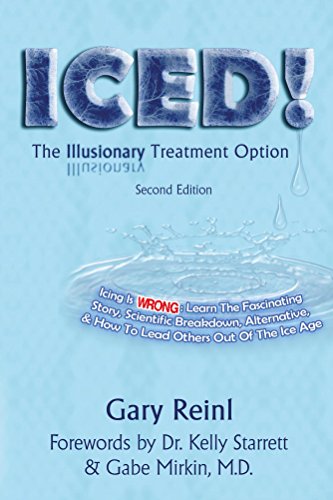
People have been perpetuating a myth over the last 50 years that claims ice is an effective treatment for acute soft tissue injuries (e.g.; sprains and strains) because it assists in recovery. The commonly accepted acronym R.I.C.E. – standing for Rest, Ice, Compression and Elevation – has been applied erroneously by athletic trainers and soccer moms alike! If your goal after a soft tissue injury is to heal as fast as possible, using ice is not going to be your best strategy.
The widespread use of ice with the intent to heal soft tissue injuries has no scientific backing, no peer reviewed research. In fact, it has the exact opposite!
In a 2012 article in the British Journal of Sports Medicine called Cooling an Acute Muscle Injury: can basic scientific theory translate into the clinical setting? it was stated: “ice is commonly used after acute muscle strains, but there are not clinical studies of its effectiveness.”
The Journal of Emergency Medicine published a study in February 2008 entitled: Is ice right? Does cryotherapy improve outcome for acute soft tissue injury? The research concluded that “there is insufficient evidence to suggest that cryotherapy [i.e. icing] improves clinical outcome in the management of soft tissue injuries.”
If those two didn’t solidify the argument in your mind, check out this last study entitled Topical Cooling (Icing) Delays Recovery from Eccentric Exercise Induced Muscle Damage from the May 2013 edition from the Journal of Strength and Conditioning Research. It was found that “topical cooling [i.e. icing], a commonly used intervention appears to not improve but rather delay recovery from eccentric exercise induced muscle damage.”
With such surmountable evidence against the case of icing post injury, one will wonder why the application of ice has been so pervasive over the last 50 years. My thought is that since it does numb the nerves around the injury, thereby decreasing the pain, this perpetuates the myth. However, as the research has stated above it does not help with the recovery process and has been shown to effectively slow down the healing process as the cooling mechanism causes blood vessels to constrict. This constriction keeps the swelling and inflammation – the crux of the body’s healing response, brining more immune activity to a place of injury – from doing its job properly by slowing down the process and dragging out the painful swelling and inflammation.
So if icing is wrong, what can we do to properly treat acute soft tissue injuries? We will need a new acronym or MECHanism to address this situation properly…
Move. Elevate. Compress. Heat. (and never ice symptoms anymore)
Movement of the affected body part prevents the formation of adhesions and increases circulation which transport in nutrients and carries away metabolic waste. Moving allows the body to lay down new tissue along the lines of stress or normal ranges of motion. In contrast, the old suggestion of Rest causes tissue to be laid down in a disorganized pattern resulting in poor function and reducing ranges of motion. Whether your movement is an active or passive range of motion activity or manual manipulation of tissues it will stimulate the nerves that communicate pain inhibition to the brain. Think of the time when you fell and skinned your knee and your mother rubbed the area and it magically felt better, this is the idea behind movement. A TENS unit will also facility movement in an elevated position.
Elevate the injured area above the heart to increase the circulation of swelling and inflammation away from the injured area. Most likely you will be sitting while elevating the area but should still make an effort to move. An example would be if it is an ankle sprain, think about moving it up and down, side to side, and clockwise and counter-clockwise. If it is a groin or larger muscle strain, think about applying a TENS unit to stimulate movement of the tissues.
Compress with an ACE bandage to facilitate increased circulation. Pair movement with compression.
Heat augments the benefits of movement by causing the blood vessels to open up, or vasodilate, which increases the movement of swelling and inflammation away from damaged tissue and promotes the introduction of white blood cells and other healing mechanisms to the area.