These articles explore the body, the mind, the environment, and the systems that shape human health. Each piece is written to make complex ideas easier to understand, whether the topic is training, nutrition, sleep, stress, digestion, symptoms, physiology, disease, or the way modern life affects how we feel and function.
Strength, Health, & the Art of Living Well
The Physical Power of Thought
What you think about is important, not only in life, but training as well, because it literally has the power to manifest physical change. As I’ve said before, bodybuilders are the original “biohackers” as they are always looking for ways to push the boundaries of what is possible and consistently improve their performance. It is from their tireless effort that we get the mind/muscle connection, or thinking about the muscle helps it grow exponentially more than just placing it under tension alone.
Why?
It comes down to the fact that the mind is the sum total of the central nervous system functioning, whereby its endocrine secretion is called a thought. That secretion can directly affect cellular activity and protein formation, which, very simply, means a thought has a tangible action. It may sound woo but there is research to back it up.
A study reported in the New Scientist entitled Mental Gymnastics Increase Bicep Strength took ten volunteers and asked them to imagine flexing one of their biceps as hard as they could for five times a week. The researchers recorded electrical brain activity during the participants sessions and assessed their muscular strength every two weeks. Those who only imagined flexing, increased their biceps strength by 13.5% in just a few weeks, compared to the control group.1
The power of thought can go a long way. Take a look at another study published in the Journal of Neurophysiology that had subjects divided into three groups. The first was asked to exercise by contracting and relaxing one finger on their hand for five sixty-minute training sessions a week for four weeks. A second group, following the same training schedule, was instructed to only mentally rehearse the same exercises, without physically activating any muscle in their finger. The control group neither thought about, nor exercised their finger outside of their daily routines. At the end of the study, researchers found that the group who actually did the the physical exercises exhibited a 30% gain in strength over the control group. No shit, right?! Well, the crazy part is that the second group, who only mentally rehearsed the exercises, demonstrated a 22% increase in muscle strength over the control group!2 The mind produced a quantifiable affect on the body.
None of this is meant to say that simply thinking about an outcome is going to be a substitute for doing the work, but that if you combine both intent and physical effort you can create the best outcome.
—————————-
1. Cohen, Philip, “Mental gymnastics increase bicep strength.” New Scientist (21 November 2001)
2. Yue, G., and K. J. Cole, “Strength increases from the motor program: comparison of training with maximal voluntary and imagined muscle contractions.” Journal of Neurophysiology, vol. 67(5): 1114–1123 (1992)
7 Pillars of Health: Improving Health in The modern environment
The default in nature is health, so why are we fat, sick and broken? It is because our environment has change, our bodies have not. We share 99.7% of the same genetics as our relatively disease free hunter-gatherer ancestors yet eat worse, move less, sleep worse, encounter more stress and toxins, and wonder what the cause is of chronic disease. It's really not that hard! Take control of your health with the 7 Pillars of Health.

The default in nature is health, so why are we fat, sick and broken?
It is because our environment has changed, our bodies have not.
Looking back 10,000 years when we lived as hunter-gatherers people ate nutritious foods, got significant amounts of “exercise” outside in the sun as they carried out their daily activities. This was followed by an equal amount of downtime that provided for adequate rest and the development of remarkable social connections which literally extended from the cradle to the grave. Although running from the occasional tiger and lack of wi-fi made it far from an idyllic paradise, there is little evidence of obesity or chronic disease.
This is in stark contrast to our modern environment where there is an epidemic of poor health (diabetes, depression, cancer, obesity, heart disease etc.), yet we continue to wear our constant stress, long hours in the office, sleep deprivation and ability to eat like a garbage disposal as a badge of honor. Perhaps with the fact that we share 99.7% of the same genetics as our hunter-gatherer ancestors we can further understand that the problem is not us, but within the environment we live.
So, how can we affect change? Unfortunately, there is no magic pill, but there are pillars (seven to be exact!) that were created to serve as a guide to promote better health in our current environment. The follow is a brief overview of what will be covered in 7 Pillars of Health class:
Nutrition
Food is energy and we use the calories it contains along with the vitamins and minerals to carry out specific tasks like digestion, regeneration and repair (sleep), detoxification as well as managing our stress.
Questions to think about regarding Nutrition:
- What will it do to my blood sugar?
- Does it contain quality protein?
- What kind of dietary fat does it supply?
- What is our food’s nutritional status?
Movement
Movement is more than just exercise, it is the ability to demonstrate strength and ease throughout an entire range of motion. Movement is a dynamic process not a single event. Your day should be comprised of movement — squat, hinge, lunge, hang, climb, press, pull, carry — as opposed to separating it into a single hour of the day.
Questions to think about regarding Movement:
- What happens when we don’t move?
- How can we improve movement?
- Is one type of movement better than another?
Digestive Health
The health of the gut determines what nutrients are absorbed and it is often said that we are what we eat, but it is more accurate to say, we are what we absorb. Therefore, digestive health should be defined as the optimal digestion, absorption and assimilation of the food.
Questions to think about regarding Digestion:
- How is the digestive system supposed to work?
- How can your gut affect your overall health?
- What are common issues and how do we get them?
- How can we improve digestive health?
Sleep
Sleep is not the absence of wakefulness. Sleep acts as a barrier between the individual and the environment that allows the body to regenerate physically and recalibrate mentally. This is accomplished best with 8-9 hours of uninterrupted sleep, where it is as easy to fall asleep as it is to wake up at your scheduled time without the need for an alarm or stimulants.
Questions to think about regarding Sleep:
- Why is sleep important to our body and brain?
- How can we fix sleeping issues?
Stress
Stress is the response to any stressor in our internal or external environment that acts as a threat to knock our body out of balance. The purpose of stress is to help our body cope with stressors and survive. Your resiliency, energy, endurance and life all depend on the proper functioning of the stress response.
Questions to think about regarding Stress:
- What constitutes as stress?
- What happens when our homeostatic balance is threatened?
- What happens when we are faced with chronic stress?
- How can we alleviate stress?
Detoxification
Detoxification is an ongoing physiological process which involves the mobilization, transformation and elimination of toxins from external and internal sources.
Questions to think about regarding Detoxification:
- What is a toxin and how is it processed?
- Why is detoxification important?
- How can we lessen our toxin burden?
Community
A community is a shared environment with like-minded people in pursuance of similar goals where individuals included provide positive support system that allows for trust in one another and the freedom to express themselves freely.
Questions to think about regarding Community:
- Do you share similar values and goals with those around you?
- Do those around you provide a positive support system?
It is important to understand that no Pillar is more important than another. Instead, achieving optimal health is about proper balance between all Pillars. The sooner we can incorporate the lesson’s the 7 Pillars offer into our life's the better we will be able to live and thrive. When stress, sleep disruptors and environmental and emotional toxins are removed and replaced with balance, purpose, nutrient density, nontoxic products, rest, exercise and healthy relationship, the body becomes incredibly resilient. Our medical system has spent billions of dollars researching health, yet it's going to be hard to come up with a better health recommendation than the sum of what the 7 Pillars offer; eat whole, unprocessed foods, move frequently (preferably outside in the sun), avoid stress so you can sleep like you are on vacation and surround yourself with loving relationships. While we cannot (and probably would not) go back in time and sleep in caves again, we can begin to focus on resurrecting dietary and lifestyle approaches that are more in keeping with our genetics and our ancient metabolic systems, that have become disturbed by the environment we find ourselves in in modern life. It is the purpose of the 7 Pillars of Health to teach you how these disruptions are the cause of our poor health and how each of us can rectify it.
For class information please contact us!
Why You Should Sit on the Floor

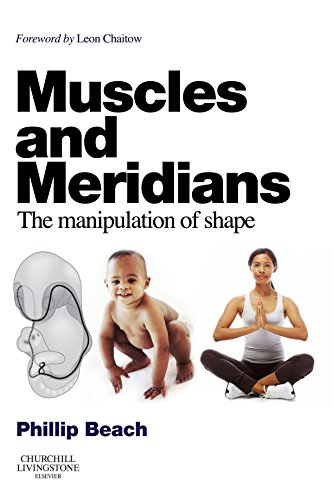
Adapted from Philip Beach's Muscles and Meridians
We as a society need to spend more time on the floor. All humans, all cultures, throughout the ages have spent all our resting and much of our working lives on the ground in variations of a squat, kneeling or cross-legged position. Humans had found ease getting into and out of these primary floor postures until we created the comforts of modernity, which has led us to dis-ease in both form and function. Dr. Mel Siff stated in his book, Facts and Fallacies of Fitness; “Many aboriginal folk squat many times a day while carrying out their daily chores, while the Japanese sit on the floor with their knees folded fully flexed beneath them bearing all their body weight for prolonged periods daily.” We share the same functional heritage as all ancestral cultures, yet with modern amenities we have lost much of our capacity to move pain free simply because we fail to practice these archetypal postures.
All well constructed systems develop a corrective mechanism to preserve harmony between the many hierarchical levels within the system. The practice of Archetypal Postures as a form of repose should be seen as a self-tuning mechanism for the body whereby removing these modes for self-correction is asking for trouble as it is necessary to preserve our biomechanical tune, without which we are met with the prevalence of issues like plantar fasciitis, low-back pain and even neck and shoulder pain. The dense network of muscle, joints, and fascia fail to reach appropriate tune if not adequately placed in our Archetypal Postures. And it should come as no surprise as to why….
In the modern world, we rise out of an elevated bed, waddle to a toilet that is again elevated. Breakfast is eaten either standing or sitting in a chair; work is generally completed in the same fashion, either sitting or standing. On a good day we can make it into the gym but many exercises are based on machines that are constructed so that people can, AGAIN, sit and exercise. After sitting or standing all day, we return home to sit for dinner, followed by more sitting in front of the television on a couch in roughly the same position that we have existed in throughout the entirety of our day. Most people, day after day, fail to make any transition from the standing to the floor, failing to place the musculoskeletal and fascial system through a full range of movement thus compromising biomechanical tune.
Tune is not optional. It is the point and purpose of a well functioning system. The interaction of hundreds of muscles and joints in such a way that internal friction and dissonance are kept to a minimum is not a task that is congruent with spending your life in a chair. Suppose you are a musician who is about to go on stage and your assistant offers you a choice of two instruments – one is well-crafted and aesthetically pleasing but is hand-made, the other is cheap and naturally weathered by time but is in tune. As a musician you have no choice but to take the instrument that is in tune because no amount of aesthetics is going to win-over a crowd primed for harmony. Whether it is an instrument or a biomechanical system, tune appreciates; for rhythm imposes unanimity upon the divergent and melody imposes continuity upon the disjointed.
Achieving better tune, thus less pain and freer movement, is as easy as adopting a floor based lifestyle, just like those used by our ancestors. Instead of sitting on a chair or couch while watching television, transition to sitting on the floor. Floor sitting encourages normal movement patterns across the biggest joints and muscles of the biomechanical system. Archetypal postures are also valuable to use in a post-exercise setting, as the body finds the usual 30-second calf stretch to be an insignificant task of little benefit after running up a hill for the last 30-minutes. Returning to the floor in various archetypal postures will reestablish fundamental relationships between muscle compartments as they cool and set. After exercise go back to the floor as people have always done.
The following are the Archetypal Postures that you should try:
Full Squat (Figure 11) - the ideal squat has the feet near parallel, the heels on the ground and the knees over the second toe with no collapse of the medial arch of the feet. The tibias anterior is relaxed as body weight has moved over the ankles center of gravity. Ease in full squat tunes the relationship between the muscles of the anterior and posterior compartments of the lower leg. When dorsiflexion is limited the anterior compartment muscles have to work against the stronger posterior compartment muscles so conditions such as shin splints are more likely to manifest.
Toe Sitting/Standby Posture (Figure 102) - most people find this a difficult posture to maintain, as the muscles and fascia of the sole of the foot are too tight to allow the metatarsal heads of the feet to fully rest on the floor. The toes do not fully extend and so they take too much body weight. If the posture is held and the toes become more painful the natural movement pattern is to use the quadriceps to sit up and raise the shoulders to lift away from he pain. Ease in the toe sitting posture normalized deep relationships between the posterior compartment muscles of the calf, the plantar fascia, and the toes that are the sensitive end point of all the muscles of the leg. All the limb musculature expresses itself via the fingers and toes. In systems theory, you look for control points that are able to initiate or correct the system. Tuning the toes and feet is much more than just a local increase in flexibility.
Kneeling (Figure 103) - when the quads are too tight and the buttocks cannot rest on or between the heels it is indicative of an extensor pattern that is too primed
Long Sitting (Figure 70) - to sit with a straight back in this posture is difficult if the hamstrings are too tight. IF the low back is stressed in flexion by this posture it is better to slightly flex both knees to take the pressure off the low back. Sitting in these postures builds a functional core strength as the abdominal wall is interacting with the powerful muscles of the hip joints
Cross-Legged (Figure 80) - people who find these cross-legged postures easy often do so because they are stiff in the more linear postures
Butterfly Posture (Figure 89.5) - the sartorial muscle is often associated with this posture as it externally rotates the leg and flexes the knee
Side Saddle (Figure 106,107,108)
Cowboy (Figure 129,129,130)
Additional research…
new research reveals that adopting a wide variety of sitting postures can help to control blood sugar and development of tendinopathies. Reference: Leon Chaitow, Naturopathic Physical Medicine: Theory and Practice for Manual Therapists and Naturopaths, 1st Edition (London: Churchill Livingstone, 2008), E-ISBN: 9780702037016, https://www.elsevier.com/books/naturopathic-physical-medicine/chaitow/978-0-443-10390-2; Arkiath Veettil Raveendran, Anjali Deshpandae, and Shashank R. Joshi, “Therapeutic Role of Yoga in Type 2 Diabetes,” Endocrinology and Metabolism 33, no. 3 (September 2018): 307–317, https://doi.org/10.3803/enm.2018.33.3.307; Matthew Wallden and Mark Sisson, “Biomechanical Attractors – A Paleolithic Prescription for Tendinopathy & Glycemic Control,” Journal of Bodywork and Movement Therapies 23, no. 2 (April 2019): 366–371, https://doi.org/10.1016/j.jbmt.2019.03.004
Image Credit:
World Distribution of Postural Habits
Further Reading:
Sit and Move Better
Stay Mobile - Restore Archetypal Postures