
These articles explore the body, the mind, the environment, and the systems that shape human health. Each piece is written to make complex ideas easier to understand, whether the topic is training, nutrition, sleep, stress, digestion, symptoms, physiology, disease, or the way modern life affects how we feel and function.
Strength, Health, & the Art of Living Well
More sleep can double your testosterone
Older men can sometimes double their testosterone levels by getting more sleep, according to a human study that Plamen Penev of the University of Chicago published in Sleep.
More sleep can double your testosterone level
Older men can sometimes double their testosterone levels by getting more sleep, according to a human study that Plamen Penev of the University of Chicago published in Sleep.
Not enough sleep
Nearly all of us probably get too little sleep, mainly because we are seduced every day by the technology around us. It enables us to generate light at night, provides us with 24-hour entertainment and information through electronic media, and makes it possible for us to have contact with each other whenever we want. Every evening, when our body tells us that it's time to sleep, we can also do a thousand other things instead.
Sleep & hormones
Too little sleep messes up our hormone balance. It makes our body less sensitive to insulin for example. Dutch researchers recently showed that after just one night of four hours' sleep, young men's insulin sensitivity went down by twenty percent [J Clin Endocrinol Metab. 2010 Jun;95(6):2963-8.] and that of diabetics by a quarter. [Diabetes Care. 2010 Jul;33(7):1573-7.]
In the latter case, lack of sleep is clinically relevant, so doctors could advise diabetics who react insufficiently to their medicines to get more sleep. "Sleep duration might become another therapeutic target to improve glucoregulation in type 1 diabetes", the Dutch researchers say.
Sleep & testosterone
Testosterone is also affected by amount of sleep. That's not so strange, as our bodies make much more testosterone when they're asleep than when they're awake. [J Clin Endocrinol Metab. 2005 Aug;90(8):4530-5.] The figure below is from the study mentioned here. It shows how much testosterone is present in the blood of 22-32 year-old men while asleep and during the rest of the day.

The better men sleep, the higher their testosterone level rises while they are asleep. [J Clin Endocrinol Metab. 2001 Mar;86(3):1134-9.]
In the average male over forty, the testosterone level goes down by 1-2 percent per year, but researchers occasionally come across men in their eighties with a testosterone level you'd expect in a young man. Add to that the fact that many older men – but not all men – sleep less and less deeply as they get older, then you automatically think of the idea that Plamen Penev wanted to test in his study: does the testosterone level decrease in older men because they sleep less?
Penev based his theory on, among other things, research done by Eve Van Cauter, a sleep researcher at the University of Chicago who has celebrity status in the field of endocrinology. Van Cauter discovered early in the 21st century that men in their forties make less testosterone while sleeping than men in their twenties.[J Clin Endocrinol Metab. 2003 Jul;88(7):3160-6.]
Study
Penev measured the amount of testosterone 12 slim, healthy, non-smoking men aged between 64 and 74 had in their blood in the morning. He also got the men to wear a small gadget around their wrist, which enabled him to see how many hours per night the men slept. That varied from 4.5 to 7.5 per 24 hours. The longer the men slept, the figures below show, the more testosterone there was circulating in their blood.
The men that slept the least had a testosterone level of 200-300 ng/dl. That's a normal amount for men of this age, but it's on the low side. The men in the study who slept the most had a testosterone level that was twice as high: 500-700 ng/dl. That's a level you'd expect in healthy young men.
Conclusion
"These findings suggest that complaints of poor or insufficient sleep in otherwise healthy older men can be associated with a more pronounced age-related androgen decline", writes Penev. "Eliciting such sleep complaints in the physician's office may facilitate the judicious interpretation of lower testosterone levels in the older male patient."
Before men consider doing testosterone therapy, they might first measure the amount of sleep they get. And 'measuring' is different from 'guessing' or 'estimating'. Most people overestimate the number of hours that they sleep. This was also the case in Penev's study. The men thought that they slept seven and a quarter hours per day on average, but Penev's recordings showed that they only slept six hours a day.
Reference: Sleep. 2007 Apr;30(4):427-32.

Quarantine & Chill
With social-distancing in full swing, it may seem like options for improving your health are down to Quarantine and Chill, or participating in the scourge of bodyweight workouts that are woefully ineffective at promoting long-term results. Instead let's look at some options that can be completed within the isolation of your own home!

With social-distancing in full swing, it may seem like options for improving your health are down to Quarantine and Chill, or participating in the scourge of bodyweight workouts that are woefully ineffective at promoting long-term results. Instead let's look at some options that can be completed within the isolation of your own home!
NUTRITION
- When stocking your pandemic pantry you should select foods that consist of the greatest nutrient density, with the lowest impact on blood sugar, have the ability to be stored for a relatively extended period. Selecting foods that are highly satiating will be your best option in these times. Look for high in protein (such as meat, dairy, eggs, or protein powder), high in fat (coconut cream, olives, olive oil, nuts or nut butters), and lower starch/fructose containing fruits and veggies (such as all colors of sweet potatoes and carrots, or frozen berries). For more info check out the Fundamentals of Food.
- If you are having trouble piecing together an easy meal use this SUPER SIMPLE MEAL PLANNER.
Combine: 1 Fat + 1 Protein + 1 Veggie + 1 Spice = Delicious and healthy meal!

Combine: 1 Fat + 1 Protein + 1 Veggie + 1 Spice = Delicious and healthy meal!
- Now would be a great time to start a practice of Intermittent Fasting (IF), or choosing a feeding window that is shorter than you're used to. This will not only allow you to conserve on food but also give your body a break from digesting food. Because the body is never dormant it will use the extra time to complete a process called autophagy, which clears out senescent or old defective cells that could cause health problems. Additionally, IF promotes the clearance of pathogens and infectious bacteria, protect against the negative effects of stress and provides time for our gut lining to rest and repair.

- Incorporating a practice of IF is as simple as selecting a window of time you'd like to eat within whether 6,8,10, or 12 hours. Whichever time you pick, you have that long to get all your calories in and then you're done! Example, if you have an 8-hour window and you eat your first bite of food at 6AM, you'll have to get all your calories in by 2PM.

- Supplementation that will help with boosting Immunity are:
- NAC
- Vitamin C
- Zinc
- Glycine
- Glutamine
- Multi Vitamin/Mineral
- Protein
- Immune Support (probably the best choice overall)
To save 5% on the purchase of any or all of these go here: NutriDyn
MOVEMENT
- During this quarantine it looks like we have to be sequestered to sitting on the couch, however I have a better idea. We can make time to focus on improving movement in our daily lives and how we interact with the environment we consistent find ourselves in. WHY WE SHOULD SIT ON THE FLOOR is an article I wrote about how incorporating sitting in different archetypal postures can improve mobility with very little effort. Here is an excerpt:
"Achieving better tune, thus less pain and freer movement, is as easy as adopting a floor based lifestyle, just like those used by our ancestors. Instead of sitting on a chair or couch while watching television, transition to sitting on the floor. Floor sitting encourages normal movement patterns across the biggest joints and muscles of the biomechanical system. Archetypal postures are also valuable to use in a post-exercise setting, as the body finds the usual 30-second calf stretch to be an insignificant task of little benefit after running up a hill for the last 30-minutes. Returning to the floor in various archetypal postures will reestablish fundamental relationships between muscle compartments as they cool and set. After exercise go back to the floor as people have always done."
- Many are probably under the impression that stretching is the best way to improve mobility, however this notion completely leaves out the fact that mobility without strength equates to being a spaghetti noodle, and you'll never be able to fight your way through the toilet paper isle like that. In an article entitled REFINING TUNE THROUGH MOVEMENT I address this very issue and go over ways to improve mobility for the comfort of your quarantine. Here is an excerpt:
"Why can’t I stretch my way to tune, like we used to do in gym class? Before you bend over to touch your toes, listen to what former U.S. National Gymnastics coach and author of Building the Gymnastic Body, Christopher Sommers has to say; “flexibility can be passive, whereas mobility requires that you can demonstrate strength throughout the entire range of motion.” The individual muscle concept presented in traditional anatomy class gives a purely mechanical model of movement by separating things into discrete, executable functions that fail provide an accurate picture of the seamless integration seen in a living body – when one part moves, the body responds as a whole. Thus, the ability to transition into and out of a squat requires more than any one muscle being flexible. The approach to mobility parallels biomechanical tune, in that they engender a systemic or whole-body foundation. Efficient structural relationships, therefore, must be exposed and resolved within the individual so that one can grow out of a the dysfunctional pattern."
- The following are my contributions for what to do for workouts at home...
- Here is a link for bodyweight movements... or take a look at the following gif

- Here is a minimalist workout for those with limited equipment... if you want to order some adjustable dumbbells check out this review

- Don't forget about your abs...

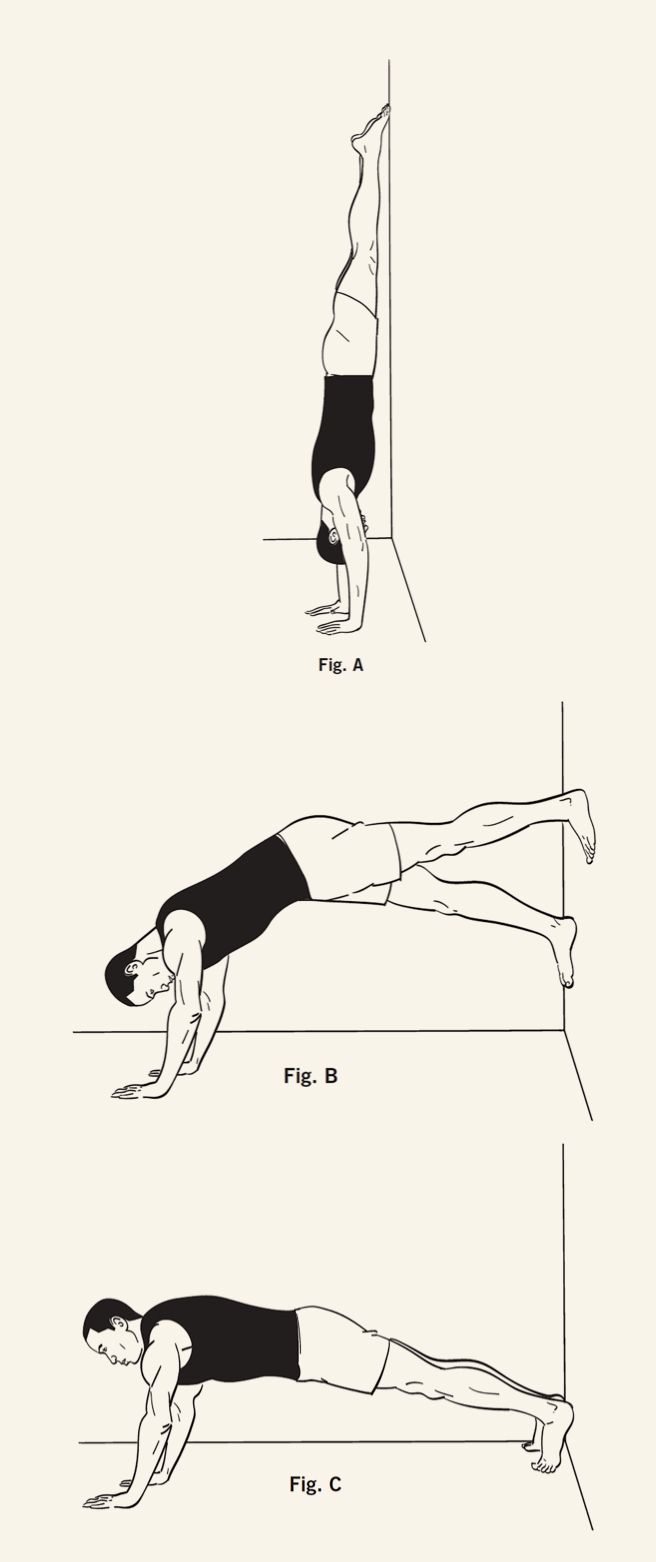
- Bored with the regular shit?? Learn how to do a HandStand...
First, let’s define the position you need to maintain.
Torso “Hollow”: Sit on a chair, back straight, with your hands on your knees. Now, try to bring your sternum (chest bone) to your belly button; “shorten” your torso by 3 to 4 inches by contracting and pulling in your abs. You’ll maintain this position throughout the entire exercise. No lower-back arch or sag permitted.
Shoulders “Protracted”: Keep your torso “hollow” per the above. Now, pretend you’re hugging a telephone pole. Your shoulders should be well in front of your chest, sternum pulled back strongly. Straighten your arms but maintain this position. Next, without losing any of the aforementioned, lift your arms overhead as high as you can. There you go. Now we can begin.
Get into a handstand position against a wall, nose facing toward the wall. (fig. A)
Keeping your body in one line, slowly walk your hands out and your feet down the wall simultaneously. (fig. B) Keep your knees straight and walk with your ankles. The steps should be small.
Reach the bottom with your feet on the floor in a push-up position. (fig. C) Correct your form to be maximally hollow and protracted.
Reverse and go back up the wall, returning to handstand position. That is 1 rep, my friend.
SLEEP
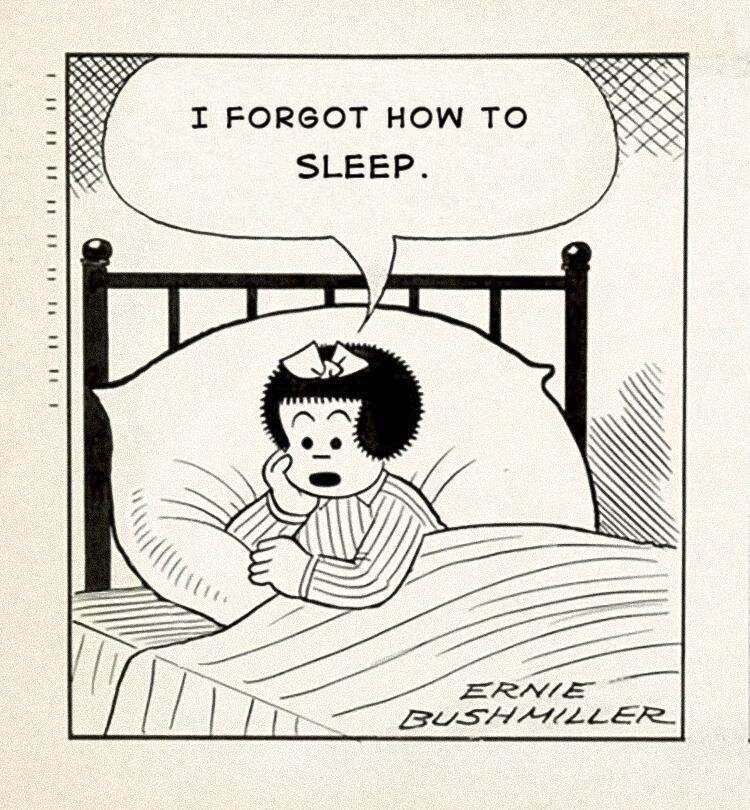
- A lack of sleep contributes to the following...
Impairs insulin sensitivity. Want to become diabetic overnight? Just sleep poorly. A night of poor or missed sleep can make one as insulin resistant as a type 2 diabetic… the effects of sleep deprivation on insulin sensitivity and thus glucose tolerance are profound and nearly immediate.
Increases gut permeability. Increased intestinal permeability itself impairs insulin sensitivity while increasing our reactivity to certain foods.
Increases systemic inflammation. Even with very little sleep loss we immediately see increases in C-reactive protein and the tendency of platelets to stick together (not great if you’re at risk for a stroke or heart attack). All modern degenerative diseases have a commonality of increased systemic inflammation
IMPAIRS IMMUNE FUNCTION.
Alters anabolic hormones.
Causes cravings. Sleep deprivation is a stress, and when a stress becomes chronic, one of the first adaptive mechanisms our bodies shift toward to deal with the stress is to seek out quick energy…. generally that comes in the form of highly processed foods
Lack of total sleep time suppresses your immune system and increases your risk of upper respiratory tract infections (URTI).
(Sheldon Cohen et al., “Sleep habits and susceptibility to the common cold,” Archives of Internal Medicine 169, no. 1 (2009), https://doi.org/10.1001/archinternmed.2008.505; Aric A. Prather et al., “Behaviorally assessed sleep and susceptibility to the common cold,” Sleep 38, no. 9 (2015), https://doi.org/10.5665/sleep.4968.)
- Now is the perfect time to work on improving our sleep hygiene. Start with the following tips and sleep soundly in your isolation chamber, aka room.
Go to bed at a similar time each night (even on the weekends). The body thrives on routine.
Stop using blue-lit screens (TV, Computer, or Mobile devices) 2 hours before bed. The blue light from the screen tricks your brain into thinking the sun is out, therefore suppressing melatonin — a hormone necessary for the onset of sleep.
Be sure to stop eating at least 2 hours before bedtime, as digestion can cause sleep interruptions.
If you must use a device with a screen, utilize "night mode" or blue-light blocking technology like F.lux to minimize your exposure.
Sleep in a cool, dark room. Research has shown that the best temperature to sleep at is around 68°F. And, the darker the room the better.
STRESS
- For sure we are in uncharted waters at the moment in history however that doesn't mean you have no control over the way you feel. Perception is a matter of choice. You can choose how you respond to anything. In any situation in life you have three options. You can change it, you can leave it, or you can accept it. What is not a good option is to sit around wishing you would change it but not changing it, wishing you would leave it but not, and not accepting it. Acceptance is the only way to mitigate the stress of this situation and move to make the best out of whats left.
- Something I find helpful in quieting the mind is the practice of gratefulness. Most people think you can only be grateful after something has happened, but if you are actively looking for things to appreciate you will find them. Establishing a habit of gratitude welcomes it into your consciousness, shifting awareness away from less desirable or stressful emotions. Get a journal, download an app, or simply open up a blank document on your computer. Set aside a few minutes each day and use the following prompts to ease your mind...
To be answered in the morning:
I am grateful for… 1._______ 2._______ 3.________
What would make today great? 1._______ 2._______ 3._______
Daily affirmations. I am…. 1._______ 2._______ 3.________
To be answered at night:
3 amazing things that happened today… 1._______ 2._______ 3.________
How could I have made today better? 1._______ 2._______ 3.________
ideas on what to be grateful for:
an old relationship that really helped you or that you valued highly.
an opportunity you have today
something great that happened yesterday, whether you experienced or witnessed it
something simple near you or within sight… the gratitude points shouldn’t all be “my career” and other abstract items
- Another thing that could have a positive impact is taking up Breathing Exercises or Meditation.

GUT HEALTH
- Since you have nothing else to do, think about fixing your shit, literally! 80% on your immune system lies in your gut. If you are not digesting your food optimally, your immune system may be compromised. Check out the following guide to assess your mess...

DETOXIFICATION
- The Environmental Working Group estimates that on average, each adult uses nine personal care products daily, with 126 different chemical ingredients. Women use more products than men, so the tally for women goes up to 168 chemicals from personal care products alone. Many of these products we use in, on, or around us are full of chemicals that are linked to serious health issues such as endocrine disruption or cancer. Take this time to review the ingredients of the personal care products you use — shampoo, toothpaste, cologne, perfume, make up, deodorant, lotion, etc. Enter anything you can't pronounce into the EWG's SKINDEEP rating system to see what you're being exposed to. Once you find the worst offenders, replace the item with a less toxic version when you run out.

EXTRA STUFF
- Take your ass outside in the sun and go for a walk (just avoid people). Going out in the sun is the easiest way to stay active, slim and boost immunity....
Sunlight's effect on Immunity: Vitamin D production, stimulated by exposure to the UVB portion of solar radiation, may improve immune system response, and thereby reduce risk of infections. One of the mechanisms by which this is accomplished is the production of antimicrobial peptides (AMPs), which can help to negate the effects of bacteria, fungi, and viruses. One of the most important AMPs is cathelicidin, which is under control of the vitamin D receptor (VDR), whose activity is regulated by the presence of the potent hormone form of vitamin D: 1,25-dihydroxyvitamin D (1,25(OH)2D). Research demonstrates that when disease causing microbes breach physical barriers, a class of proteins called toll-like receptors (TLRs) recognizes the invading pathogens and triggers the body's immune cells (white blood cells, such as macrophages) to respond in various ways, including the activation of the immune cell's vitamin D receptors (VDR). This response prompts the stored form of vitamin D, 25(OH)D, to be taken from the blood and hydroxylated to form 1,25(OH)2D (the potent hormone), which binds to the VDR of the immune cell. The cathelicidin gene is then activated and the human cathelicidin, LL-37, is synthesized within the immune cell in order to destroy the pathogen after the immune cell engulfs it. This reaction is totally dependent on the availability of the stored form of vitamin D. The cathelicidin also acts by destroying the integrity of the lipoprotein membranes of the pathogens, rendering them harmless. It also has a chemotactic effect, acting as a chemoattractant for immune cells in the immediate vicinity of the pathogen breach.
Can sun exposure help with body transformation?
A recent study from Northwestern Medicine demonstrates that timing and intensity of light correlate with BMI... Optimal BMI is between 18-25.
The study showed that exposure to bright morning light was directly related to BMI. After adjusting for confounders such as diet, exercise, and timing of sleep, it was determined that very early exposure to morning light correlated remarkably to lower BMI. Even when light intensity was equal at different times of the day, those who received the earliest bright light had lower BMI. In fact, for each hour later in the day when light exposure occurred, BMI increased by 1.3 units. This fact is exceptional, since a person who has a BMI of 25 (upper ideal range) could approach 30 (basically obese), over time, simply by the habit of receiving sun exposure later in the day, e.g. 10:00AM rather than 7:00AM.
The authors suggested that the mechanisms by which early light exposure could influence weight control could be the following: (1) resetting the circadian rhythm, (2) the greater quantity of blue light in the morning sun and (3) effects on melatonin production. Whatever the mechanisms, we now know that early-morning sun is important to weight control. It may also be important to other health issues. But before we begin to think sun exposure is the cure-all for obesity, we must address poor nutritional and exercise habits. Nevertheless, in these times of limited access to gyms, it is a simple addition to any routine.
ref: Reid KJ, Santostasi G, Baron KF, WIlson J, Kang J, Zee PC. Timing and intensity of light correlate with body weight in adults. PLoS One 2014;2;9(4)
Sun exposure is superior to Vitamin D supplements in prevention of weight gain.
Research conducted on mice with shaved backs were placed on a high-fat diet and then exposed to non-burning ultraviolet radiation (UVR) during a three-month experiment. The mice, without the benefit of UVR, would have been expected to gain weight rapidly on that diet, but when they were exposed to UVR, the weight gain was impressively reduced. The UVR treatment achieved a 30-40% reduction in weight gain, compared to the expected weight gain with the high-fat diet.
Other benefits included: significant reductions in glucose intolerance, insulin resistance and fasting insulin levels (all markers and predictors of diabetes), nonalcoholic fatty liver disease, and cholesterol. All of these factors, including obesity, are part of a cluster of maladies known as the metabolic syndrome which is indicative of deteriorating health and susceptibility to heart disease and diabetes.
ref: Geldenhuys S, Hart PH, Endersby R, Jacoby P, Feelisch M, Weller RB, Matthews V, Gorman S. Ultraviolet radiation suppresses obesity and symptoms of metabolic syndrome independently of vitamin D in mice fed a high-fat diet. Diabetes. 2014 Nov;63(11):3759-69
COMIC RELIEF via MEMES



7 Pillars of Health: Improving Health in The modern environment
The default in nature is health, so why are we fat, sick and broken? It is because our environment has change, our bodies have not. We share 99.7% of the same genetics as our relatively disease free hunter-gatherer ancestors yet eat worse, move less, sleep worse, encounter more stress and toxins, and wonder what the cause is of chronic disease. It's really not that hard! Take control of your health with the 7 Pillars of Health.

The default in nature is health, so why are we fat, sick and broken?
It is because our environment has changed, our bodies have not.
Looking back 10,000 years when we lived as hunter-gatherers people ate nutritious foods, got significant amounts of “exercise” outside in the sun as they carried out their daily activities. This was followed by an equal amount of downtime that provided for adequate rest and the development of remarkable social connections which literally extended from the cradle to the grave. Although running from the occasional tiger and lack of wi-fi made it far from an idyllic paradise, there is little evidence of obesity or chronic disease.
This is in stark contrast to our modern environment where there is an epidemic of poor health (diabetes, depression, cancer, obesity, heart disease etc.), yet we continue to wear our constant stress, long hours in the office, sleep deprivation and ability to eat like a garbage disposal as a badge of honor. Perhaps with the fact that we share 99.7% of the same genetics as our hunter-gatherer ancestors we can further understand that the problem is not us, but within the environment we live.
So, how can we affect change? Unfortunately, there is no magic pill, but there are pillars (seven to be exact!) that were created to serve as a guide to promote better health in our current environment. The follow is a brief overview of what will be covered in 7 Pillars of Health class:
Nutrition
Food is energy and we use the calories it contains along with the vitamins and minerals to carry out specific tasks like digestion, regeneration and repair (sleep), detoxification as well as managing our stress.
Questions to think about regarding Nutrition:
- What will it do to my blood sugar?
- Does it contain quality protein?
- What kind of dietary fat does it supply?
- What is our food’s nutritional status?
Movement
Movement is more than just exercise, it is the ability to demonstrate strength and ease throughout an entire range of motion. Movement is a dynamic process not a single event. Your day should be comprised of movement — squat, hinge, lunge, hang, climb, press, pull, carry — as opposed to separating it into a single hour of the day.
Questions to think about regarding Movement:
- What happens when we don’t move?
- How can we improve movement?
- Is one type of movement better than another?
Digestive Health
The health of the gut determines what nutrients are absorbed and it is often said that we are what we eat, but it is more accurate to say, we are what we absorb. Therefore, digestive health should be defined as the optimal digestion, absorption and assimilation of the food.
Questions to think about regarding Digestion:
- How is the digestive system supposed to work?
- How can your gut affect your overall health?
- What are common issues and how do we get them?
- How can we improve digestive health?
Sleep
Sleep is not the absence of wakefulness. Sleep acts as a barrier between the individual and the environment that allows the body to regenerate physically and recalibrate mentally. This is accomplished best with 8-9 hours of uninterrupted sleep, where it is as easy to fall asleep as it is to wake up at your scheduled time without the need for an alarm or stimulants.
Questions to think about regarding Sleep:
- Why is sleep important to our body and brain?
- How can we fix sleeping issues?
Stress
Stress is the response to any stressor in our internal or external environment that acts as a threat to knock our body out of balance. The purpose of stress is to help our body cope with stressors and survive. Your resiliency, energy, endurance and life all depend on the proper functioning of the stress response.
Questions to think about regarding Stress:
- What constitutes as stress?
- What happens when our homeostatic balance is threatened?
- What happens when we are faced with chronic stress?
- How can we alleviate stress?
Detoxification
Detoxification is an ongoing physiological process which involves the mobilization, transformation and elimination of toxins from external and internal sources.
Questions to think about regarding Detoxification:
- What is a toxin and how is it processed?
- Why is detoxification important?
- How can we lessen our toxin burden?
Community
A community is a shared environment with like-minded people in pursuance of similar goals where individuals included provide positive support system that allows for trust in one another and the freedom to express themselves freely.
Questions to think about regarding Community:
- Do you share similar values and goals with those around you?
- Do those around you provide a positive support system?
It is important to understand that no Pillar is more important than another. Instead, achieving optimal health is about proper balance between all Pillars. The sooner we can incorporate the lesson’s the 7 Pillars offer into our life's the better we will be able to live and thrive. When stress, sleep disruptors and environmental and emotional toxins are removed and replaced with balance, purpose, nutrient density, nontoxic products, rest, exercise and healthy relationship, the body becomes incredibly resilient. Our medical system has spent billions of dollars researching health, yet it's going to be hard to come up with a better health recommendation than the sum of what the 7 Pillars offer; eat whole, unprocessed foods, move frequently (preferably outside in the sun), avoid stress so you can sleep like you are on vacation and surround yourself with loving relationships. While we cannot (and probably would not) go back in time and sleep in caves again, we can begin to focus on resurrecting dietary and lifestyle approaches that are more in keeping with our genetics and our ancient metabolic systems, that have become disturbed by the environment we find ourselves in in modern life. It is the purpose of the 7 Pillars of Health to teach you how these disruptions are the cause of our poor health and how each of us can rectify it.
For class information please contact us!
4 Reasons Why You Need Quality Sleep
1. Want leaner legs? - Phase 1 & Phase 2 detoxification happen during sleep, if your sleep is poor you will have higher body fat on the lower body. Also, it will be more difficult to lower stored body fat on Thighs, Hamstrings, Knee, Calves
2. Sleep deprivation can increase inflammation, which will lead to a reduction in insulin sensitivity. Which will lead to a increase in body fat over time due to insulin resistance.
3. Sleeping just one less hour can lead to a increase of hunger as much as 45% according to one study on sleep & nutrition habits.
4. Sleep is a opportunity for the body to repair itself. Most restorative functions of the body happen overnight, so poor sleep will comprise your ability to recover from your training sessions.
12 Clinical Pearls from Dr. Rakowski
1. People who thrive are the ones that make and metabolize acids correctly. Acid can be your friend if you manage it properly.
2. Here is a pearl from Dr. Rakowski, he showed a scientific paper on B12 absorption and brain aging. If you don't absorb B12, your brain ages 617% faster! As I have stated before, the greatest impact of not testing your HCl levels is compromising your brain health.
3. Growth hormone is a significant anti-depressant. Deep sleep is the real way to achieve optimal growth hormone levels.
4. The major benefit of using Arginine is boosting growth hormone during effort, besides boosting NO2.
5. Only fat people make too much estrogen.
6. People who have elevated triglycerides have low levels of growth hormone.
7. The body ignores constant stimuli. Changing everything constantly is one of the keys to success whether we are talking about training, diet, or supplements.
8. Brain derived neurotrophic factor is a strong anti-depressant produced by exercise that induces lactic acid production.
9. Learning improves 20% after exercise. Why are we canning Physical Education classes?
9. Charlie Chaplin fathered a child when he was 80. Sexual dysfunction is rampant because people are simply unhealthy.
10. Low-grade systemic inflammation (metaflammation) is associated with obesity, insulin resistance and chronic disease (Brithish Journal of Nutrition (2009) 102, 1238-1242
11. Friends do not let friends get fat.
12. Sleep is your most powerful anti-inflammatory agent
The Promise of (Omega-3) DHA
From heart disease to joint pain, the conditions shown to benefit from increased omega-3 fatty acid intake are diverse. The cardioprotective and anti-inflammatory benefits of omega-3s are well established in scientific literature. The heavy skewing of polyunsaturated fats toward omega-6 in relation to omega-3 in the modern Western diet is a contributing factor that exacerbates many chronic conditions regularly seen in clinical practice. With docosahexaenoic acid (DHA) serving as a structural component of cell membranes—particularly in the brain—and also recognized as a precursor to inflammation-resolving molecules, sufficient intake of DHA via marine foods or supplements can have far-ranging effects. Obvious and well-documented benefits from DHA are conditions involving inflammation, chronic pain, and ocular health. However, recent research is bringing to light new potential for this fatty acid.
A promising study in rats demonstrated that DHA may minimize neuronal damage due to traumatic brain injury (TBI). Researchers gave test animals DHA doses equivalent to 3, 12, and 40mg/kg for 30 days before inducing TBI. They observed that DHA at the highest dose resulted in positive changes to all markers of axonal and cellular injury studied. Lower doses had more selective effects on individual markers, but were still beneficial. The same researchers had also shown that omega-3 supplements can be helpful for repair following a TBI, but the former study is one of the first to suggest that DHA might actually have prophylactic effects when serum levels are replete prior to injury. Considering how devastating the physical, emotional, and financial effects of TBI can be for the military’s ‘wounded warriors’ and their families, researchers have suggested the Department of Defense prioritize research into regular supplementation with omega-3 fatty acids to establish a protective baseline for those at greatest risk for TBI. The same beneficial effects could also be expected to carry over to others at risk for head injuries, such as young athletes engaged in contact sports.
Another expanding role for DHA is in sleep quality. In a study from Oxford University, children ages 7-9 who were given a 600mg DHA supplement (from algae) for 16 weeks slept close to one hour longer than children taking a placebo. They also had fewer episodes of waking during the night, which could positively impact learning and academic performance. The authors suggest this could be because omega-3 status—especially DHA—seems to influence melatonin production and pineal gland function.
DHA repletion has also been shown to benefit learning and behavior in children. This makes sense, given DHA’s key role in the physical structure of the brain, but in light of the newer research, perhaps it’s also the result of improved sleep quality. Although the study subjects were children, most adults are only too aware that insufficient sleep makes it difficult to focus and retain new information. Children given 600mg DHA/day showed improvement in reading ability as measured on standardized tests, and improvement in behavior (attention, impulsivity, opposition, hyperactivity) as rated by parents.
Alcohol & Weight Loss
Alcohol & Weight Loss | After Your First Two Drinks
After your first drink, your body starts to get rid of the alcohol quickly using the alcohol dehydrogenase (ADH) pathway.1 In this pathway, ADH converts the alcohol into acetaldehyde, which gets further broken down to acetate. These by-products (acetaldehyde and acetate) are considered to be highly reactive and can increase oxidation throughout the body, but especially in the liver.
Because your body sees these by-products as dangerous, it wants to use them as fuel.This means your body will significantly blunt fat-burning close to 75% after just one and a half drinks.2 And it will stop using carbs for energy. Therefore, although very little alcohol will be stored as fat (less than 5%), the fat and carbs you are eating have an increased risk of being stored as fat.
Your liver can process these toxins through the increased use of certain vitamins, such as the water soluble vitamins B1, B3, B6, folate and C, while also possibly depleting some of the fat-soluble vitamins, A, E and K1. Over-time these decreases in vitamins can play a secondary role in loss of motivation, energy, and well-being.
After your first couple of drinks, your brain also starts to increase its usage of GABA. GABA is an inhibitory neurotransmitter in the brain and is a large reason why alcohol is known as a “depressant.” Over time, the GABA receptors get used to the effects of alcohol, which is a reason why people may need more and more alcohol to feel the effects from alcohol consumption.3 GABA is also the neurotransmitter, principally responsible for allowing you to stay asleep. Therefore when your brain uses more of it before you go to sleep, you have less while you’re actually sleeping, causing a disruption in restful sleep.
Alcohol also affects the higher processing areas of the brain, the cerebral cortex, while leaving the lower areas of the brain somewhat unaffected. This leaves you more emotional than you would normally be. If you’ve ever experienced “drunk logic” while doing or saying things you would never think to do sober, then you’ve experienced the inhibitory effects of having your cerebral cortex taken out of the equation.
While your body has started to use the alcohol as energy, your body releases anti-diuretic hormone (ADH) to help your body rid itself of the alcohol. This basically means that your urine volume increases significantly (about 100 ml per 10 grams of alcohol).4 If you’ve ever “broken the seal,” you know that the more you continue to drink, the more frequently you use the restroom.
Since your kidneys are working over-time, your body releases an increase in certain minerals and electrolytes especially calcium, magnesium, copper, selenium and manganese. All of these play important roles not only in blood volume, but in bone health, blood pressure and the anti-oxidant pathways.
In addition to everything above, a small increase in cortisol typically occurs with moderate drinking while testosterone levels will drop about 6.8% in men (not so much in women).5 Aromatase will also increase. Aromatase is an enzyme that helps to convert testosterone to estrogen and is obviously not something that is welcomed by many guys.
Alcohol & Weight Loss | After Six to Eight Plus Drinks
If you’re drinking a moderate amount of alcohol, those things listed above are the main effects, at least short-term. If you drink heavily and drink often, another system called the Microsomal Ethanol-Oxidizing System (MEOS) system kicks in at the point when the ADH pathway becomes overwhelmed.
This system is interesting because it causes your body to generally burn off more energy as useless heat and probably saves your life from too high of a blood alcohol level. It is primarily controlled by a special enzyme that plays an important role in utilizing certain medications and the metabolism of fatty acids. This increased rate of medication breakdown can decrease their effectiveness, while the incomplete breakdown of fatty acids can cause an increase in oxidation. This increase in oxidation becomes exacerbated as the body’s main anti-oxidant (glutathione) is also impaired, decreasing your ability to fight the oxidation.
As your drinking levels continue to increase, testosterone levels drop from 6.8% with 4 drinks to 23% with 8 drinks.6 This drop, combined with a slowdown in protein synthesis, can cause havoc when trying to recover from a workout.
In addition to that, fluid loss will generally become more significant, causing dehydration that might affect you for days afterwards. Finally, with heavy drinking, the breakdown of alcohol can occur for up to 48 hours after your last drink. This means less glucose is reaching your brain and working muscles, making you both more tired and quicker to fatigue if you do exercise.
If You’re Going to Drink Alcohol, Drink in Moderation and Not Too Often
You would think after listing all that happens in your body after consuming alcohol, the no-brainer suggestion would be to not drink. What is missing though are some of the benefits from consuming moderate amounts of alcohol.
Alcohol is shown to increase insulin sensitivity, which basically means that your body needs less insulin to do its job. In addition to that, research has shown that women who drink a moderate amount will have the same or slightly lower BMI, as those who don’t drink.7 The same effect is not seen in men. Those who moderately drink are also at less risk of dying from heart disease and cancer while decreasing one’s risk of Alzheimer’s8and even slightly improving your immune system.9
In other words, complete abstinence may not be needed while trying to lose fat as long as it’s done in moderation and not very often (think one time per week). If you don’t drink, obviously don’t start, but if you want to have a couple of drinks on the weekend, there is nothing necessarily wrong with having one or two. In future articles, I will list some of the best and worst drinks to have when going out and 5 strategies you can implement to decrease the deleterious effects of having a night of heavy drinking.
Alcohol & Weight Loss | Wrapping It Up
In any fat loss plan, there are three main components that should be priority: Diet, Exercise, and Sleep.
As stated throughout the article, a moderate amount of alcohol can increase total calories, decrease your motivation for exercise, and negatively affect your sleep. Despite this, many people can enjoy a drink or two, without throwing those three components completely out of whack.
On the other hand, drinking heavily can significantly derail energy levels, has a larger influence on dehydration, negatively impacts hormonal levels, and can significantly disrupt your sleep. Therefore, limit your overall levels of alcohol and put yourself in the best position to reap some of the benefits of alcohol consumption, while not derailing your overall progress.